Where to go
Classes & Skills
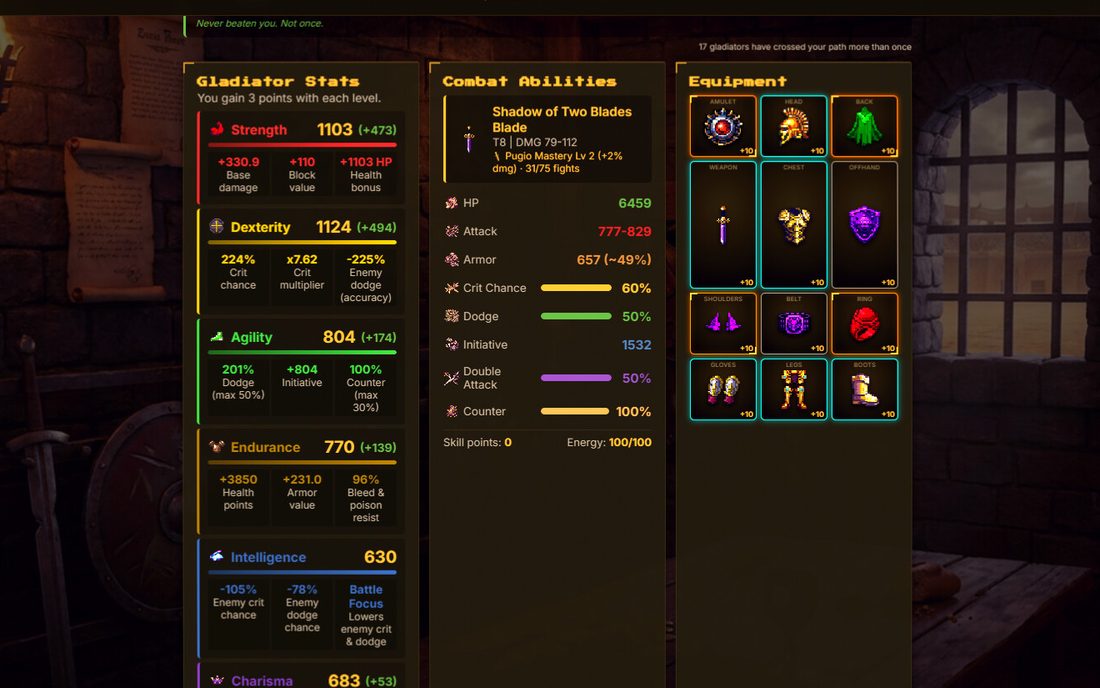
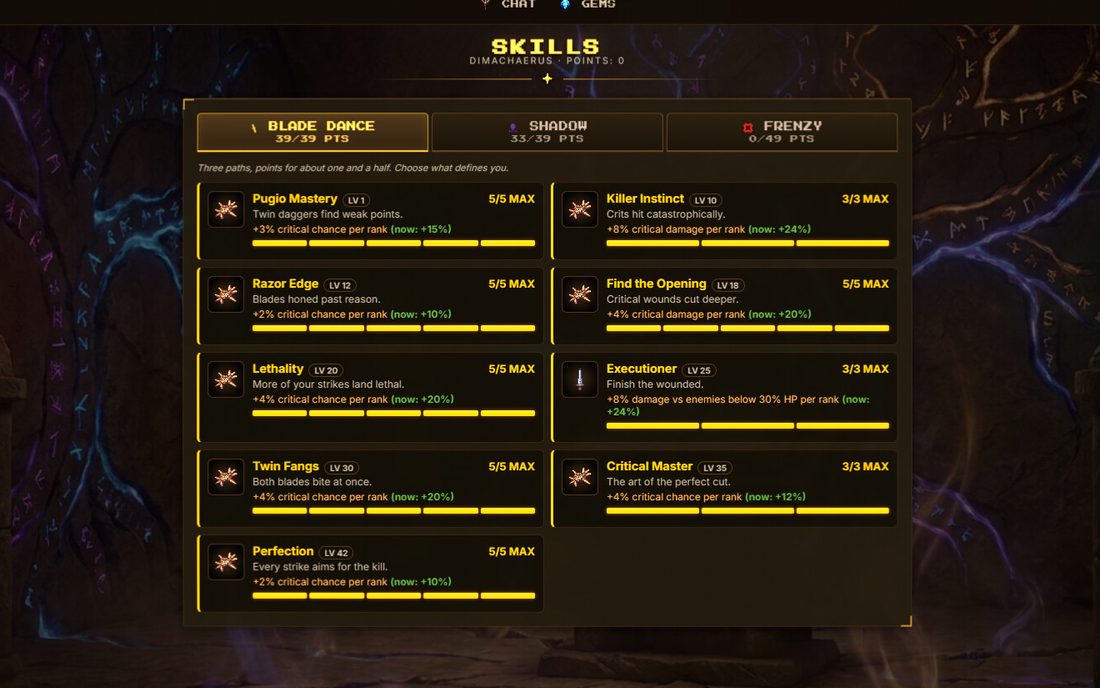
Four classes with base stats and passives, three-branch skill trees, attributes, mastery lines and stat training.
Combat
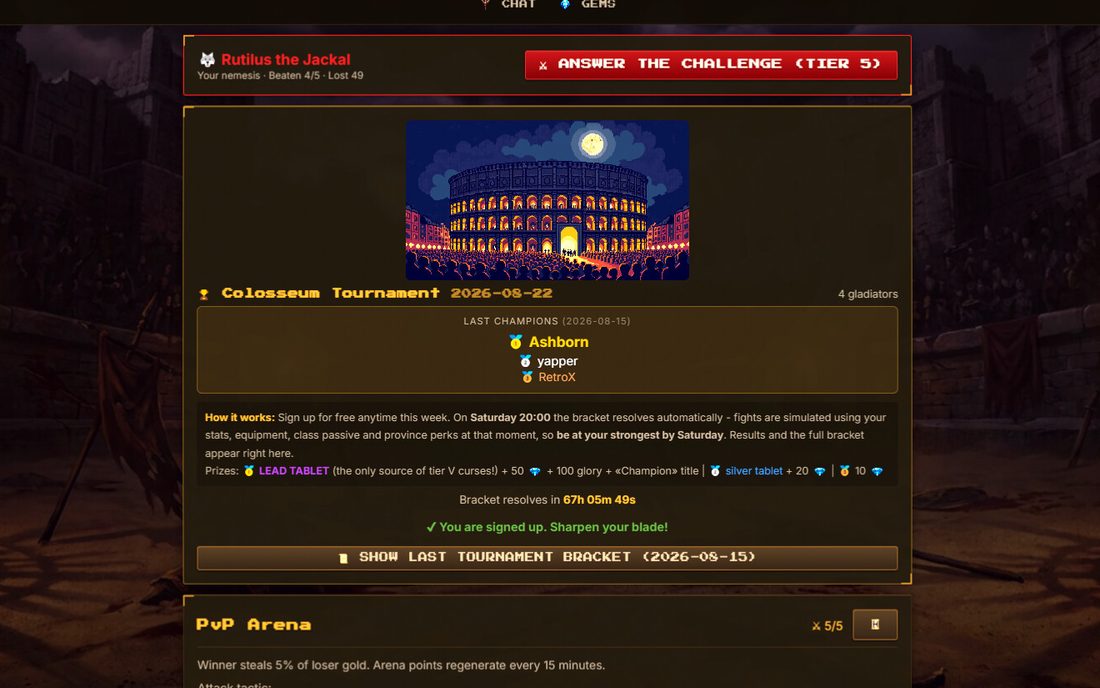
How a round resolves, every derived-stat formula, the hard caps, PvP arena rules, tournaments and Nemesis.
Arsenal
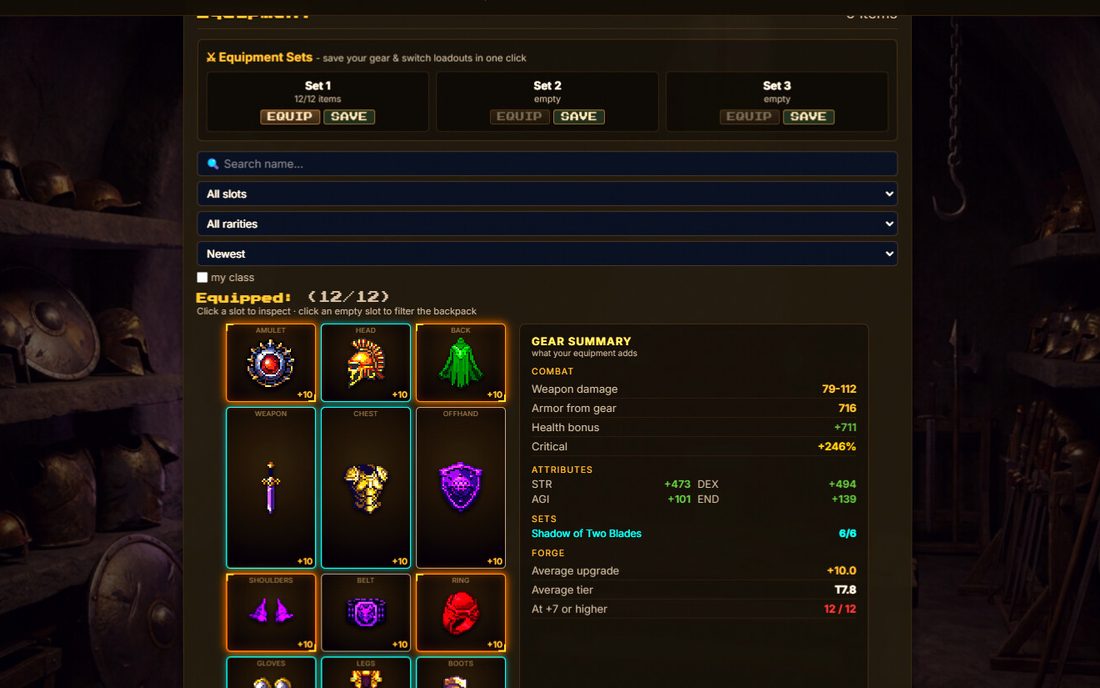
438 weapons and armour pieces with real stats, class locks and lore, filterable by slot, weapon type and class.
Loot & Forge
29 uniques with their drawbacks, 22 set bonuses, affixes, quality tiers, curse tablets and the blacksmith.
Dungeons & Bestiary
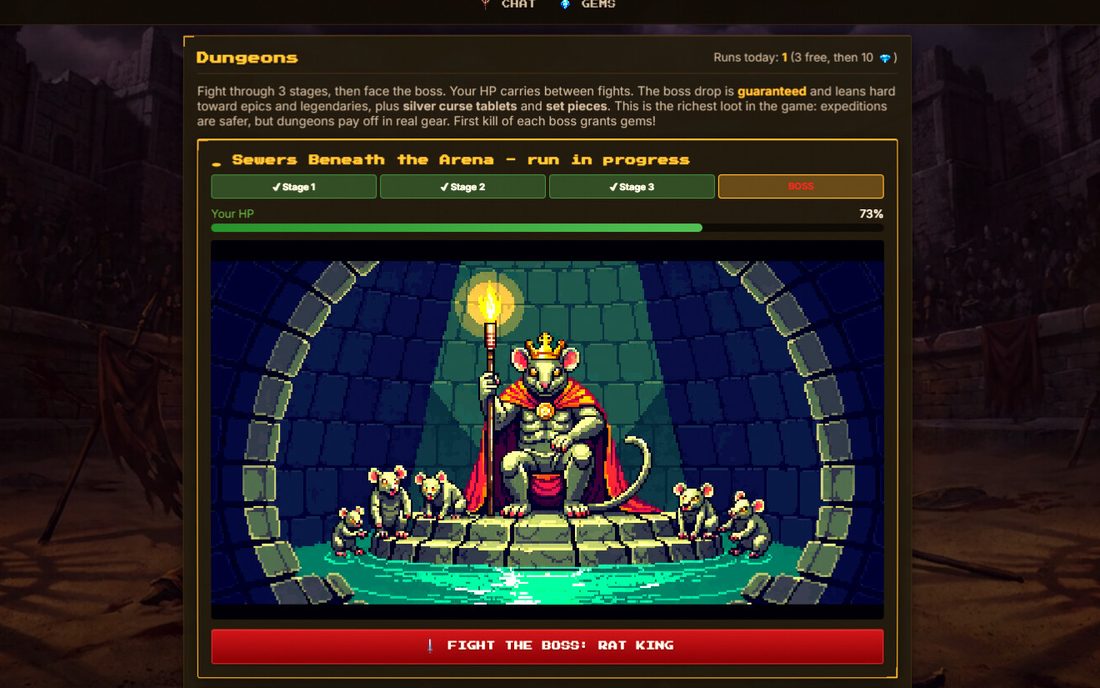
7 dungeon bosses, all 38 enemies with stats and lore, expeditions, road encounters, world bosses and beasts.
The Ludus
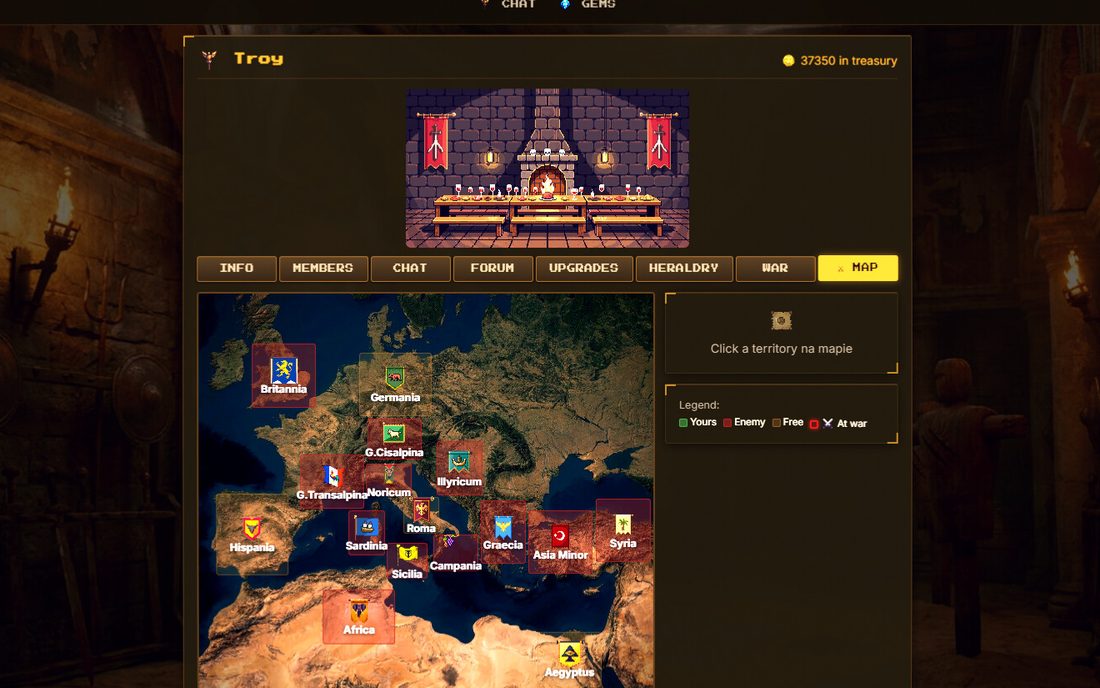
Buildings, grandeur, prestige, heraldry, the sixteen provinces, wars, rebel raids and the raid boss.
The Gods
9 gods, what each one grants, and the exact condition you have to meet to earn the favour.
The Breach
The recurring siege event: waves, defence posts, and what the city owes you afterwards.
Story
The quest chain, act by act: objectives, rewards and every line of dialogue for the acts already published.
Systems
Work, daily quests, login rewards, titles, achievements, gems, cosmetics, the market, the tavern and chat.
A look at the game
Getting started
From the in-game handbookThe Basics
The loop: fight → collect loot and gold → upgrade your gladiator → take on stronger fights. Everything in the game feeds this loop.
⚡ Energy - quick fights and dungeons cost energy. It regenerates 1 point every 2 minutes (VIP: 90s, below level 10: 60s). Never let it sit at max overnight - start a timed expedition or a work shift instead.
Busy - timed activities (expeditions, work, story missions, master lessons... ) occupy your gladiator: no arena or other timed actions meanwhile. One body, one place. Guild actions (defending or assaulting provinces) are never blocked - your ludus fights as a school.
Currencies:  Gold - everything from gear to training; arena winners steal 5% of your carried gold, so spend it.
  Gems - premium, earnable in game (boss first-kills, tournaments, story).
  Glory - fame from PvE and tournaments. Elo - your PvP rating.
Daily resets happen at midnight your local time (free dungeon runs and more). Dungeons allow 3 free runs and up to 10 paid ones a day, so no wallet buys an endless day of loot.
New here? Follow the Story - it teaches every system, pays well, and its rewards scale all the way to legendary gear.
How the game works, in short
One gladiator, permanent choices
You do not manage a roster. You pick a class at the start and everything after that, stats, skills, gear and reputation, belongs to that single fighter.
Gear is a trade, not a ladder
Every unique gives you something strong and takes something real away. A build is defined by what you accepted losing.
The ludus is the long game
Buildings, provinces and raids need other people. Solo play tops out; a school does not.
Nemesis
Lose to the same opponent and the game names him your Nemesis, tracks the feud and keeps bringing him back until one of you settles it.